



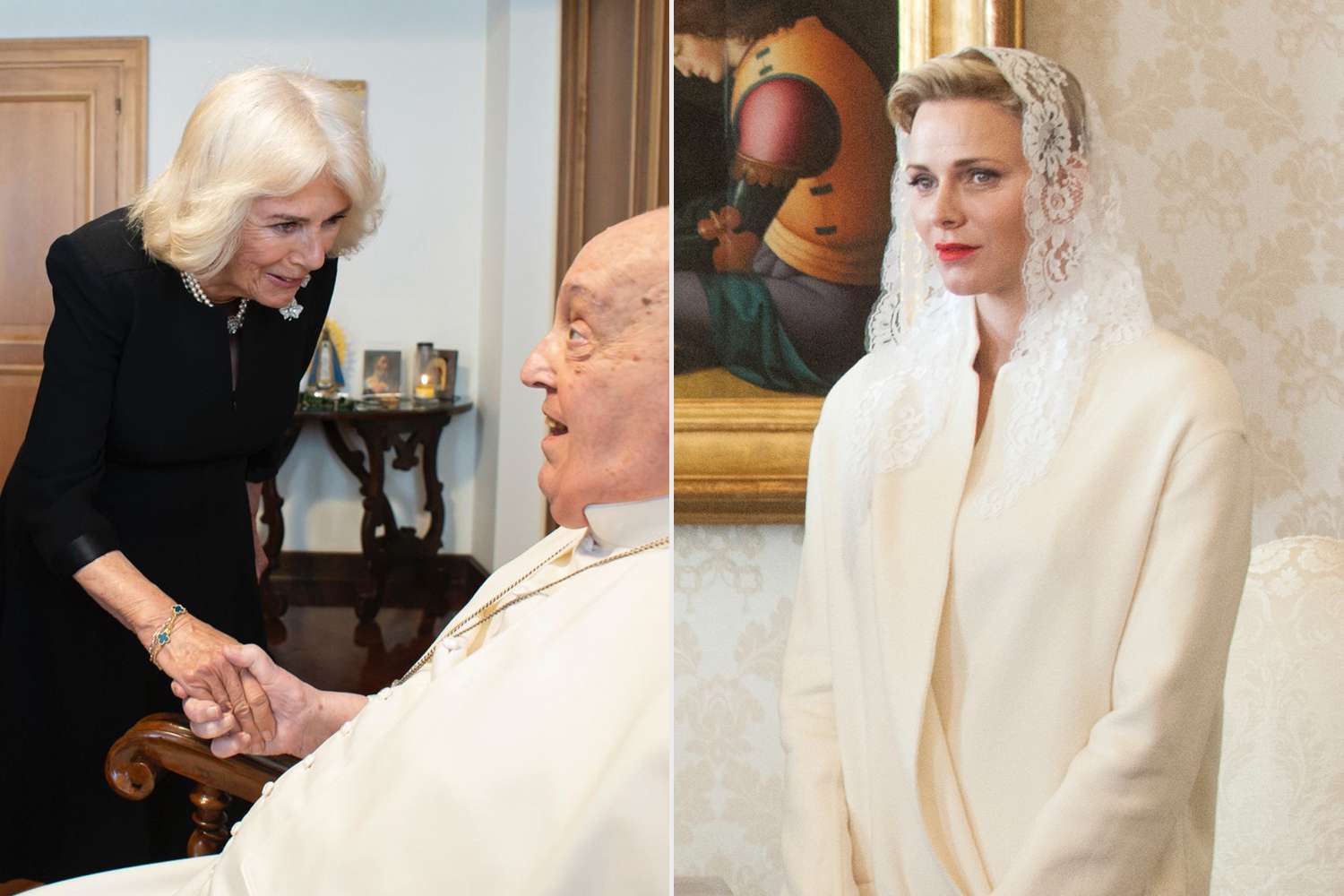
Just days before the passing of Pope Francis on April 21, King Charles and Queen Consort Camilla found themselves at the Vatican for a notable meeting on April 9.
In photographs released by the royal family, Camilla is seen donning a striking black dress during her audience with the Pope—a choice steeped in a fascinating royal dress code that many might find surprising.
So why exactly did Camilla skip the traditional white attire?
The answer lies in a little-known dress code known as “il privilegio del blanco,” or “The Privilege of the White.”
This unique stipulation indicates that only queens and princesses from Catholic nations may don white when meeting the Pope, creating a line of distinction that Camilla, as the wife of the head of the Church of England, is not part of.
Although this dress code became less stringent in the 1980s, British royals typically maintain traditional practices, opting for black instead.
The rules further dictate that women who meet with the Pope should also wear a lace veil, a custom that Camilla forewent during her recent visit, even though she adhered to it in 2009 when meeting Pope Benedict XVI.
In a notable twist, both royal tradition and current custom shaped Camilla’s appearance.
Previously, during their trip to the Vatican in 2017, Camilla chose a beige scarf and coat dress, breaking from the standard look.
Interestingly, this dress code is nothing new; Princess Charlene of Monaco has navigated this territory as well, sometimes opting to wear white during her meetings with the Pope, despite being a non-Catholic royal.
When King Charles and Queen Camilla caught up with Pope Francis in April, they shared some warm exchanges.
According to statements released by GB News, they reflected fondly on their previous meetings, emphasizing the profound impact the Pope had on their lives.
In a heartwarming acknowledgment, their message included sympathies following the Pope’s death, highlighting the compassionate bond they had established.
Photos from that April meeting capture the royal couple in their elegant black attire, complete with Camilla’s cherished Greville Ivy Clip brooch and a pearl necklace.
It was an opportune moment not just for the fashion but also for diplomatic engagement, especially since the meeting was only confirmed a day prior.
When exploring royal interactions with the Pope, one might wonder why figures like Princess Charlene can so easily break the white barrier.
Speculation leads back to the “privilege” classification, limited to only a handful of royal women, including Queen Letizia of Spain and Queen Mathilde of Belgium, who have adorned white on such occasions.
Each royal certainly has their reasons for their fashion choices, tailored to suit both tradition and personal preference.
Curiously, this royal dress code nuance allows for flexibility—even within the context of the Catholic Church.
While one may expect uniformity in such diplomatic engagements, the reality is diverse, with different royals opting for different colors depending on their cultural backgrounds and personal choices.
Queen Camilla’s choice this time around seems to reflect a respect for tradition rather than an outright rejection of the past.
Interestingly, the rules don’t mandate that those with the privilege wear white at all times; some choose black or other hues for their papal encounters.
The fluidity of these customs illustrates that, while history is respected, there’s room for personal expression.
In this complex realm of royal etiquette, Queen Camilla’s selection of black was not just a gentle nod to protocol but a sophisticated statement of her role within the British monarchy and her admiration for the Catholic faith.
It underscores a delicate balancing act wherein legacy, faith, and individual identity all converge in a profound moment of diplomacy.
Camilla’s past decisions during similar meetings certainly make for engaging comparisons, showcasing an evolution in her wardrobe choices that reflect changes in her public persona as the Queen Consort.
The depth of royal dressing serves not just as a mode of expression but as a chapter written into the story of modern monarchy.
When it comes to royal appearances before the Pope, it’s fascinating how attire has transcended mere fabric to embody rich traditions and protocols.
In the ever-evolving narrative of monarchy, Queen Camilla’s black dress is a vivid reminder that every detail matters, one nuanced decision at a time.