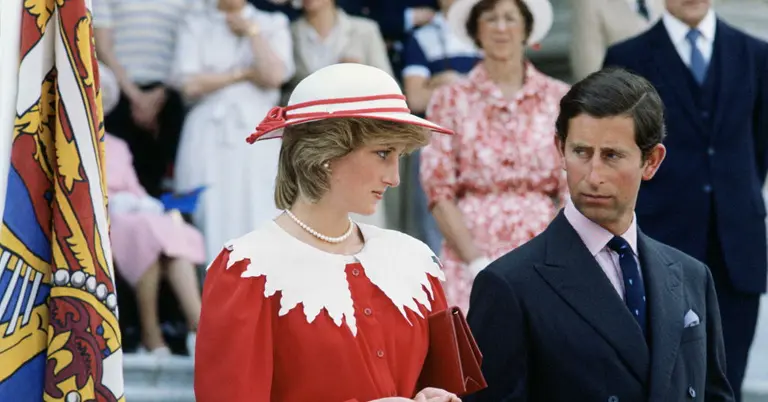
The tragic loss of Princess Diana in August 1997 has long been surrounded by speculation and conspiracy theories.
One of the most controversial claims revolves around whether the royal family, particularly Prince Charles, had a hand in the events leading to her fatal accident in Paris.
This narrative gained traction after the emergence of a letter Diana wrote to her former butler, Paul Burrell, merely ten months before her untimely demise.
In that correspondence, she expressed her profound fears that Charles was orchestrating an accident to eliminate her.
In a poignant revelation reported by The Independent, Diana penned her concerns in October 1996, sharing, “I am sitting here at my desk today, longing for someone to hug me and encourage me to keep strong.” She ominously added that her husband was plotting “an accident” to clear the way for him to marry Tiggy Legge-Bourke, the former nanny of her sons, Prince William and Prince Harry.
Burrell, who kept this startling note under wraps for years, ultimately revealed it in 2003, asserting it was intended as a safeguard for Diana.
Despite Burrell’s revelations, some close to Diana have challenged the authenticity of the letter.
One of her friends, Lucia Flecha da Lima, publicly questioned whether Burrell might have forged the correspondence.
“He was perfectly capable of imitating Princess Diana’s handwriting,” she stated, expressing skepticism about the notion that Diana feared for her life, particularly from her ex-husband.
This skepticism underscores the complexity of Diana’s relationships and suggests a deeper understanding of the royal dynamics at play.
Just a year after the letter’s disclosure, Charles found himself in the spotlight when he was questioned by authorities as part of the investigation into Diana’s death.
John Stevens, the former head of Scotland Yard, confirmed that allegations about the Prince were taken seriously but asserted that they needed solid evidence before formally questioning him.
After thorough investigation, Stevens concluded that no substantial evidence emerged to corroborate Diana’s chilling claims.
Despite the alarming content of her letter, Charles cooperated fully with the inquiry, maintaining that he had no prior knowledge of the letter until it surfaced in the media.
His willingness to assist stood in stark contrast to Prince Philip, who declined to participate in the investigation altogether.
The inquiry ultimately pointed to the reckless driving of Henri Paul, the chauffeur, as the primary cause of the catastrophic crash, compounded by the relentless pursuit of paparazzi.
The dramatic accident occurred when Diana was traveling with Dodi Al Fayed in a Mercedes, leading to a crash in the infamous Pont de l’Alma tunnel in Paris.
While both Al Fayed and the driver died on impact, Diana sustained grave injuries and was rushed to the hospital, only to succumb to her wounds later.
The combination of his intoxication and the frantic high-speed chase triggered the disastrous event, leading investigators to blame the chase for the tragedy.
Burrell claimed that Diana entrusted him with the letter as a form of protection, a way to ensure the truth could be revealed should anything happen to her.
Written just two months after her divorce from Charles, the letter expressed feelings of danger and vulnerability that plagued the princess.
“This particular phase in my life is the most dangerous,” she wrote, a haunting testament to her state of mind shortly before her death.
During subsequent inquiries, the validity of Diana’s ominous note was scrutinized further.
Friends and companions consistently emphasized their disbelief in the idea that Charles would ever harm Diana, reinforcing the complexities of their relationship as co-parents.
Burrell himself expressed disbelief that the father of Diana’s children could be involved in such a heinous plot, highlighting the intricate webs of loyalty and affection in their family dynamics.
The revelations from Diana’s letter reignited discussions during the 2007 inquest into her death, unfolding like a complex mystery that involved deep-seated emotions interwoven with public scrutiny.
The original findings, which indicated gross negligence on the part of both the driver and the raucous paparazzi, further solidified the narrative of a tragic accident rather than foul play orchestrated by the royals.
Further complicating the matter, the inquiry’s findings were shadowed by allegations aimed at media figures, including the notorious Martin Bashir, who secured a famous interview with Diana using questionable tactics.
The inquiry suggested that Diana’s revelations during that interview might have been influenced by manipulative forces, adding another layer to the already tumultuous discussion regarding her death and the role of the media in her life.
Even as the years have passed, Diana’s profound fears articulated in that letter continue to echo, sparking debate and intrigue.
The tragic circumstances of her death, combined with her poignant words, ensure her legacy remains entwined with questions that may never be fully resolved.
The conspiracy theories surrounding her passing have woven a rich tapestry of speculation, underscoring the enduring public fascination with the life and untimely death of Princess Diana.