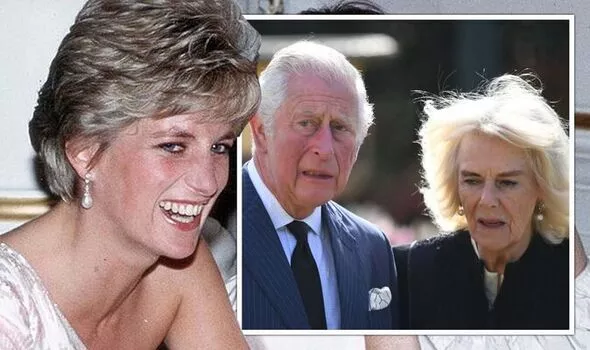
The fifth season of “The Crown” has once again opened Pandora’s Box, drawing viewers into the world of royal intrigue with the infamous “tampongate” scandal.
Released last Wednesday on Netflix, this season revisits the tumultuous early 1990s for the British royal family, a period marked by personal strife and public scrutiny.
Among the most notorious incidents is the leaked phone conversation between then-Prince Charles and his then-mistress Camilla Parker Bowles, which the show has dramatically reenacted, sparking waves of embarrassment and nostalgia.
The now-iconic phone call, which became a punchline in tabloid culture, was uncovered by an amateur radio enthusiast in 1989.
As it turns out, this private conversation provided not just scandal fodder but also an unfiltered glimpse into the lovers’ dynamics.
During their intimate chat, Camilla jokingly expressed, “I can’t start the week without you,” to which Charles playfully replied, “I fill up your tank.” Little did they know their light-hearted banter would spiral into a media frenzy.
Recalling this scandal is Ken Wharfe, Princess Diana’s former personal protection officer.
In his revealing book, he details the fallout from the tapes, describing the backlash as “savage.” Those usually loyal to the monarchy found themselves disgusted, questioning Charles’s fitness to ascend the throne.
Wharfe recounts moments that had Diana in fits of laughter, especially one cartoon where Charles was humorously depicted as chatting inappropriately to his houseplants.
Charles and Camilla were both juggling marriages during their clandestine romance, conducting their affair largely under the radar.
Their first official outing as a couple didn’t take place until 2002, but by then, the tarnish of past indiscretions lingered.
In that infamous call, they jokingly pondered Charles’s reincarnation as a tampon, igniting a barrage of jokes and insults that mocked their relationship.
The conversation initially aired over the Daily Mirror’s pages, triggering a media storm that saw titles like “Camillagate” proliferate.
This unexpected publicity proved catastrophic for Camilla’s marriage to Andrew Parker-Bowles, leading to their divorce in 1995.
Despite their split, the former couple has navigated co-parenting and friendships that survive even such public humiliation.
Fast forward to the aftermath of Diana’s and Charles’s own divorce in 1996, and it becomes evident just how intertwined their lives were.
Diana’s struggles were compounded by this new scandal, which she famously described as “game, set, and match” upon seeing the transcript of the leaked conversation.
Her bodyguard recalls her astonishment mixed with delight at her estranged husband’s newfound embarrassment.
As the tapes and their consequences rolled through British tabloids, public interest was relentless.
The discussions surrounding “tampongate” highlighted not just the scandal but also societal disenchantment with royal conduct.
Cartoonists and press outlets took aim, adding comedic relief yet conducting a very serious critique of the future king’s actions.
Netflix’s decision to portray this infamous incident has drawn both attention and ire.
Critics have labeled the dramatization “crass” and “in bad taste.” How does one balance artistic representation with the personal anguish it might revive?
Nonetheless, the show depicts the conversation in a sympathetic light, aiming to humanize the relationship between Charles and Camilla.
Remarkably, actor Dominic West, who portrays Charles, has reflected on the handling of the phone call scene.
Initially revolted by its sordid nature, he later found himself sympathizing with the couple, viewing their experience through the lens of invasiveness and exploitation by the media.
Meanwhile, Olivia Williams, who plays Camilla, stresses a profound respect for the characters they portray, emphasizing the need to honor their truth amid the chaos.
In a world where the balance between public intrigue and personal narratives continuously skews, Netflix asserts that “The Crown” engages with history, weaving fact and drama together.
Season five promises to touch on events that countless journalists have explored before, providing a nuanced lens into the complexities of royal life, scandal, and the search for love in the most unexpected places.
As viewers dive into the latest season, the legacy of “tampongate” reminds us of the complexities inherent in love, loyalty, and the voyeuristic tendencies human nature bestows upon society.
This adaptation not only entertains but also confronts us with the realities faced by those in the public eye, forever entwined in a narrative far beyond mere headlines.