In a surprising turn of events, Prince Harry’s recent outing in London has sparked debate about his assertions of feeling unsafe in the UK.
Experts suggest that his spontaneous “walkabout” hints at a deeper undercurrent of loneliness and isolation, particularly in the absence of familial support.
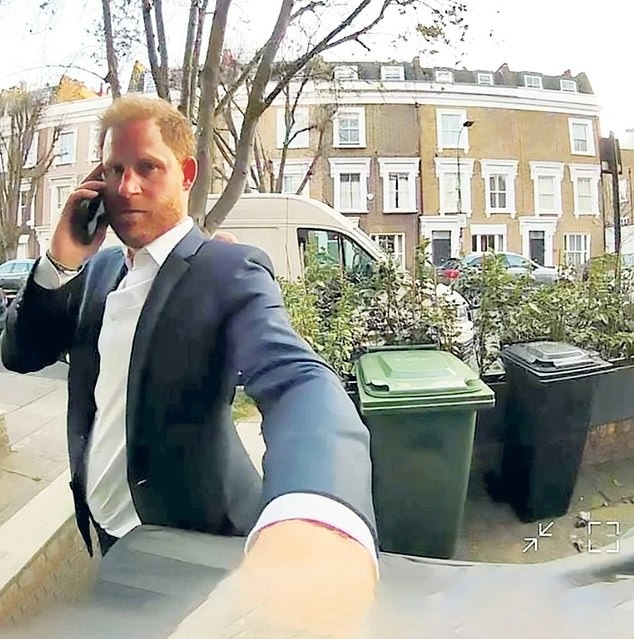
The Duke of Sussex was seen wandering a quiet street and knocking on doors, a detail captured on multiple doorbell cameras.
This stroll occurred just hours after he made an urgent plea in court for police protection, expressing fears for his life without publicly-funded bodyguards in the country.
His request underscored the tension surrounding his security arrangements and the precarious balance he finds himself in.
Following this appearance, Harry granted an exclusive interview to the BBC where he elaborated on his alleged peril.
He hinted at a conspiracy against him, suggesting that there are powerful figures who would harm him, and labeled his recent legal defeat as an establishment conspiracy.
These claims have only thickened the plot surrounding his quest for protection.
A security professional with extensive experience guarding royals voiced his surprise upon seeing Harry without visible protection.
While he noted that it was unusual for the prince to be unaccompanied, he cautioned against jumping to conclusions about whether Harry was in fact alone.
Attention quickly turned to whether his private bodyguard was simply out of view.
Reports surfaced that Harry’s unorthodox visit was aimed at reconnecting with old friends, John and Georgina Vaughan.
However, the couple had relocated, leaving Harry unknowingly knocking on a stranger’s door—a metaphorical representation of his current state of disconnect.
One neighbor, witnessing the situation, remarked how the prince seemed to be searching for connections that had long vanished.
Former detective Peter Bleksley weighed in, noting that Harry’s decision to venture alone reflected either an unfortunate blunder or a deeper personal choice.
This action paints a picture of a man yearning for companionship amidst strained family relationships, implying a struggle for belonging in familiar spaces.
Tom Bower, a royal biographer, suggested that this rather awkward encounter reinforces the feeling of loneliness Harry is grappling with.
He highlighted that without the comforting presence of family or supportive friends, Harry finds himself in a state of emotional dispair, almost a wandering figure in search of a place to belong.
Witnesses recounted Harry’s stop in the area, noting that he may have been disoriented while trying to locate an old pub or a familiar face.
One resident expressed sympathy, stating that they would have welcomed him for a chat had he knocked on their door.
Instead, Harry’s quest for connection ended abruptly with unanswered knocks.
This curious outing, juxtaposed against Harry’s vocal expressions of fear for his safety, raises questions about the authenticity of his claims.
Despite his dire court declarations, here he was in plain sight, seemingly fearless.
Observers noted the inconsistency between his public safety concerns and his actions on the street.
Adding another layer to the complexity, Harry’s recent visit to the UK also included attending a Beyoncé concert with Meghan, further showcasing the stark contrast between his royal duties and a lifestyle that seems detached from royal protocol.
Their public interactions captured a different narrative from the one he presented in court.
Court proceedings revealed that Harry’s ongoing battle for security reflects a deeper pain stemming from his estranged familial ties, particularly with King Charles III and Prince William.
His claims of being treated unfairly since stepping back as a working royal resonate within a larger narrative of a man caught between two worlds, struggling for acceptance on both sides.
The fallout from Harry’s actions and statements is palpable.
Criticism has emerged from various corners concerning his remarks about his father’s health, suggesting that openness about family matters, particularly regarding illness, is a both risky and sensitive area to navigate publicly.
As Harry continues to seek a sense of purpose and belonging, the balance between seeking protection and maintaining personal relationships remains fragile.
Observers will be watching closely, curious about how Harry will reconcile his public persona with the private struggles that seem to define his path forward.